Paramount launched a hostile bid for Warner Bros. Discovery this week, just days after Netflix reached a deal to acquire the former media company.
The rival’s multibillion-dollar efforts to buy streaming platform HBO Max and movie studio Warner Bros., among other assets, could disrupt the media industry and shape the content seen by hundreds of millions of people.
For now, the outcome remains very uncertain. Any acquisition of Warner Bros. Discovery would likely be reviewed by the Trump administration, which could block a proposed merger over antitrust concerns, according to antitrust experts at Vanderbilt University, the University of Tennessee and the Cardozo College of Law.
The government approval process could take anywhere from several months to more than a year, experts said.
The Justice Department did not immediately respond to ABC News’ request for comment.
Here’s what you need to know about the government hurdles facing a potential blockbuster deal to acquire Warner Bros:
What government obstacles await a Netflix or Paramount bid?
Streaming giant Netflix appeared to win the bidding war for Warner Bros. Discovery last week when the two companies announced a merger. However, within days, Paramount launched a hostile bid for Warner Bros. Discovery, meaning Paramount plans to appeal to shareholders in an effort to overcome management’s wishes.
Paramount’s $108 billion offer covers streaming service HBO Max, film production company Warner Bros. and cable channels such as CNN. Netflix set its deal with Warner Bros. Discovery at a lower price of $83 billion, although Netflix’s offer excluded cable channels.
Ultimately, the prevailing bid for Warner Bros. Discovery, whether from Paramount or Netflix, will likely face scrutiny from the Trump administration that could doom the proposal if agency officials believe the newly created company violates antitrust law, experts said.
An antitrust review of the merger would be based on a standard set in the Clayton Antitrust Act of 1914, some experts said. The law prohibits mergers in which “the effect of such acquisition may be substantially to lessen competition or tend to create a monopoly.”
As part of their assessment, Trump officials would examine the newly created company’s market share, especially with respect to whether it could result in higher prices for consumers or reduced fees for creators who sell content to media companies, Maurice Stucke, a law professor at the University of Tennessee, told ABC News.
An antitrust review could also focus on the potential impact on content distributors, such as movie theaters, Stucke said.
“It’s not just about higher prices,” Stucke said. “It could be less content, fewer options, less innovation and a decline in quality – all of that could be a cause for concern.”
If the Trump administration deems a potential merger illegal, a federal agency could seek a deal on terms that ease the government’s concerns.
Typically, the Federal Trade Commission or the Department of Justice (DOJ) is tasked with negotiating settlements or legal actions related to antitrust concerns.
In June, for example, the Justice Department announced a deal that allowed Hewlett Packard Enterprise (HPE) to buy Juniper Networks, a digital infrastructure company, for $14 billion. The deal requires HPE to divest a portion of its business and license Juniper Network’s critical software to competitors, according to the Justice Department. saying.
If an agreement cannot be reached between the government and the company, the Trump administration could sue the company in an effort to block the merger. A lawsuit would present a task for the Trump administration, Stucke said: “How do you prove this in court?”
The potential merger could also receive scrutiny from state or European Union regulators.

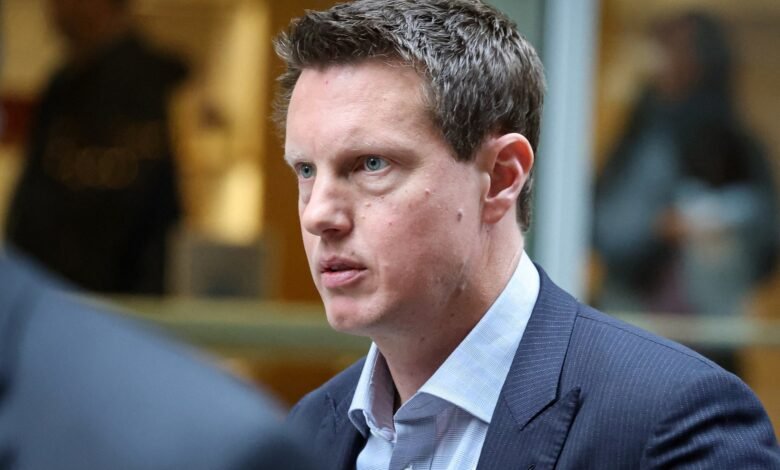
David Ellison, CEO of Paramount Skydance, leaves after an interview on the New York Stock Exchange (NYSE) in New York, December 8, 2025.
Brendan McDermid/Reuters
How might regulators weigh a bid from Netflix or Paramount?
The Netflix or Paramount proposals could raise antitrust concerns, but for slightly different reasons, some experts said.
Netflix is the most popular streaming service, with 300 million subscribers worldwide by the end of 2024, the most recent time for which data is available. The company represents 46% of monthly active users of global streaming mobile applications, according to a CNBC data analysis from intelligence firm Sensor Tower. After acquiring HBO Max, that proportion of the app’s users would increase to 60%, CNBC said.
“Netflix has studios and a big streaming part,” Sam Weinstein, a professor at Cardozo Law School who specializes in antitrust, told ABC News. “If you think it’s a market, they may have a big enough slice to raise prices and affect streamers.”
“On the other hand, they are big buyers of projects. Creators might think, ‘Well, now there’s one less studio to bid on my work,'” he added.
According to Weinstein, Netflix may seek a broad market definition that includes consumers of online videos, such as YouTube and short social media content, rather than just traditional streaming.
“In that larger market, Netflix has a much smaller share,” Weinstein said.
Speaking to reporters during a phone call on Friday, Netflix co-CEO Ted Sarandos expressed confidence in the government’s approval of the merger.
“This deal is pro-consumer, pro-innovation, pro-worker, pro-creator, pro-growth,” Sarandos said, adding that the company would “work very closely with all appropriate governments and regulators.”
Paramount+ has a smaller streaming audience than Netflix, recording around 79.1 million subscribers as of September 2025, or less than a third of Netflix’s audience. Streaming’s comparatively small market share could ease concerns among regulators about the potential to drive up prices for consumers, some experts said.
Still, Paramount has its own movie studio, Paramount Pictures, which poses a risk of less competition for content production in the event of a potential merger, Rebecca Allensworth, a law professor at Vanderbilt University, told ABC News. In turn, TV shows or movies could command lower prices for creators, while actors or other workers could lose pay, he said.
“Right now, you can approach Warner or Paramount as competitive studios,” Allensworth said. “This will eliminate one of those options.”
talking to CNBC On Monday, Paramount Skydance CEO David Ellison addressed antitrust concerns, saying Paramount’s offer compares favorably to Netflix’s when considered through the lens of preserving a competitive industry.
“What we’re creating by bringing these two companies together is a real competitor to Netflix, a real competitor to Amazon, a real competitor to Disney, not something that’s so anti-competitive,” Ellison said.
Could the Trump administration take into account non-competition issues?
The Trump administration may retain leeway to consider non-competition issues, including possible deals related to coverage on new outlets such as Warner Bros. Discovery-owned CNN, some experts said, pointing to the murky nature of antitrust law.
“A speeding violation or a murder is pretty clear cut,” Stucke said. “When filing an antitrust lawsuit, there is a lot of discretion.”
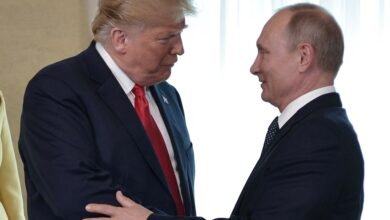
Trump, a frequent critic of major media outlets including CNN, told reporters on Sunday that he “would be involved” in the decision about a potential Warner Bros. Discovery merger. Trump’s willingness to take a direct role in evaluating deals departs from standard practice in which the president has sought to distance himself from antitrust reviews, Weinstein noted.
“The norm is that the White House would not get involved; that’s definitely not happening here,” he said.
Speaking on the red carpet at the Kennedy Center Honors on Sunday, Trump raised antitrust concerns about a potential Netflix acquisition, saying the deal “could be a problem” because of the new company’s market share.
The circumstances give the Trump administration leverage to extract potential concessions from a buyer like Netflix or Paramount, as in each case the purchase raises legitimate antitrust concerns, giving Trump the opportunity to exercise strong oversight of the merger while seeking a favorable deal, Allensworth said.
“Because antitrust law would likely find at least serious problems with the merger, Trump can make all of that go away on whatever terms he agrees to,” Allensworth added.
Weinstein agreed, suggesting it could be an agreement enforceable in court.
“It is very possible that there will be a consent decree with conditions that are not competitive,” Weinstein said.
As part of a process to seek Federal Communications Commission approval for its $8 billion acquisition of Paramount earlier this year, Skydance agreed to a series of concessions that appeared to align with the Trump administration’s views, including agreements to forego implementation of diversity, equity or inclusion programs and to appoint an ombudsman.
In a statement when the acquisition was approved in July, FCC Chairman Brendan Carr said the changes were intended to improve public trust in major media outlets like CBS.
“Americans no longer trust traditional national news media to report completely, accurately and fairly. It’s time for a change,” Carr said. “That’s why I welcome Skydance’s commitment to making significant changes to the once historic CBS broadcast network.”
Experts underscored the uncertainty surrounding the outcome of a potential Warner Bros. Discovery merger review.
“If it’s a direct merger under antitrust guidelines, that’s one thing,” Weinstein said. “If you can curry favor with the administration by making promises, that makes the deal unpredictable.”